The Beginner's Guide to Fountain Pens and Desk Ink Storage
A fountain pen asks a little more of you than a biro. You fill it, you wipe the nib, you keep an eye on it. In return, a shopping list becomes something you do not mind writing, and your desk gains one genuinely pleasant object. This guide covers the basics of the pen itself, then the part most people get wrong: what to do with the bottles, cartridges and sample vials once they start multiplying.
Why a fountain pen suits a home desk
Fountain pens reward a slower pace. The nib glides on its own ink rather than needing pressure, so longer writing sessions are easier on the hand. They are also refillable, which means less plastic in the bin and a far wider choice of ink colours than a stationery aisle offers.
There is a quieter benefit too. Because the pen costs you a little attention, you tend to use it for things worth keeping: a birthday card, a page of notes, a letter you actually post. Plenty of people find their handwriting improves simply because they slow down enough to form the letters. Ink choice helps here as well — a deep teal or a warm sepia makes an ordinary to-do list feel deliberate, while a bright orange makes it feel like a warning.
The trade-off is maintenance. Ink dries, nibs clog, and a pen left in a drawer for six months will need coaxing back to life. That is the real cost of ownership: a few minutes every week or two, and somewhere sensible to keep the bottles.
What is actually inside a fountain pen
Four parts do the work, and knowing them makes everything else easier.
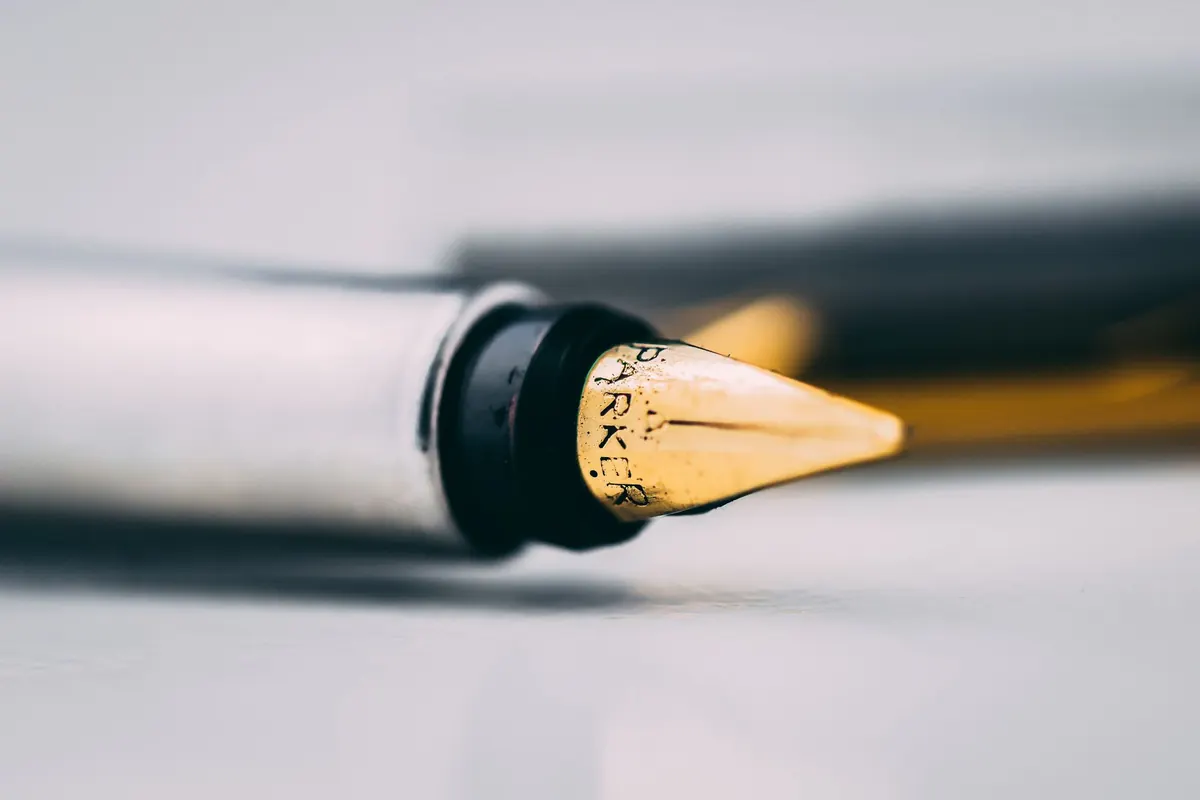
- The nib. The metal point that touches the paper. Most first pens have a steel nib; gold nibs are softer and cost more. Sizes run from extra fine to broad, plus stub and italic nibs that give line variation. A fine or medium steel nib is the safest starting point.
- The feed. The finned plastic piece under the nib. It draws ink from the reservoir by capillary action and lets air back in to replace it. Never press hard on a nib — you can push it out of line with the feed.
- The reservoir. Where the ink lives, held in a cartridge or a converter — a refillable cartridge you draw from a bottle. Some pens use a built-in piston instead and fill straight from the bottle.
- The section and cap. The section is the grip between nib and barrel; the cap keeps the nib damp and protected. Most modern pens are cartridge-converter fillers and take either option.
Choosing a first pen and ink
You do not need to spend much for something reliable. Focus on how the pen feels in your hand and how easy it is to buy refills.
- A nib you can swap or replace, so a mistake is not fatal.
- A comfortable grip diameter — thin metal sections turn slippery over a long page.
- A cap that seals well, so the nib does not dry out between uses.
- Ink in a colour you will actually use. Plain blue or black dye-based ink is forgiving while you learn.
Ink type matters more than brand. Dye-based inks are the everyday choice: they flow well and wash out of pens and fabric more easily. Pigment and waterproof inks are more permanent and better for envelopes, but they settle and can clog a pen left unused for weeks, so keep them in a pen you write with often. Iron-gall inks are best left until a weekly clean is second nature.
Buying a few 2ml or 5ml sample vials is far cheaper than committing to a full bottle. It also tells you something a swatch cannot: whether an ink feathers on the cheap paper you actually use, and how it behaves in your pen.
Filling, cleaning and everyday care
Fill over a tray or a sheet of kitchen roll, never over paperwork. Twist the converter or piston to push the air out, lower the nib into the ink until the breather hole is covered, then draw ink up. Wipe the nib and section with a soft cloth.
Clean a pen when you change ink colour, before you store it, or every few weeks if you use it daily.
- Empty any remaining ink back into its bottle, or down the sink if it is old or mixed.
- Flush the nib and reservoir with cool water until the water runs clear.
- If ink has dried inside, stand the section nib-down in a shallow glass of water overnight. A single drop of washing-up liquid helps stubborn cases, but rinse it out completely afterwards.
- Rest the nib on a folded paper towel, nib-down, so the water wicks out, then let it air dry fully before refilling.
- Reassemble, refill, and write a line on scrap paper to settle the flow.
Between cleans, keep the pen capped when you are not writing, store it nib-up if you can, and give up on the idea of never inking your fingers. A small cloth kept on the desk solves most of it.
Storing ink: bottles, cartridges and samples
This is where collections quietly take over a desk. The good news is that ink keeps for years if you treat it well.
Bottles
- Keep them upright, out of direct sunlight, at room temperature. A drawer or a closed box is ideal; a sunny windowsill is not.
- Tighten the cap after every fill. Evaporation thickens an ink surprisingly fast, and a loose cap is how you end up with sludge at the bottom.
- Never pour unused ink from a pen back into the master bottle. It carries dust, paper fibres and the risk of contamination.
- Label anything you have mixed, and keep mixtures in a small separate vial rather than the original bottle.
Cartridges and samples
- Store unused cartridges in their original packaging, upright and cool. They are sealed and will last for years.
- A part-used cartridge should stay in a pen or be sealed with a scrap of tape and used within a week or two.
- Sample vials are the easiest thing to lose. A shallow tin, a test-tube rack or even an egg carton keeps ten or twelve upright and visible in one place.
- Mark each vial with the ink name and the date you opened it. Six months later you will not remember which green is which.
A reasonable rule for a beginner is to own three or four inks and a handful of samples, rather than twenty bottles and no memory of what is inside them.
Keeping the desk itself under control
You do not need much equipment, but a small dedicated kit makes the whole hobby tidier:
- A tray or shallow drawer for bottles and vials, so they stay upright and out of the light.
- A lint-free cloth for wiping nibs, kept separate from anything you use on screens.
- A bulb syringe or a small squeeze bottle for flushing, which is much faster than running a tap.
- A capped jar of clean water for soaking a section when ink has dried.
- A scrap pad for testing a pen after filling, so your notebook stays clean.
Limiting yourself to two or three inked pens at a time is the single best habit for avoiding a drawer full of dried-out nibs.
Common beginner mistakes
- Pressing too hard. If the pen is not writing, the problem is flow, not force. Pressing will misalign the nib.
- Judging a pen on day one. New nibs often write slightly dry until they settle in.
- Leaving ink in a pen for months. Even the safest dye ink will eventually dry and clog a feed.
- Storing bottles in sunlight. It fades the colour and can encourage mould.
- Changing ink without flushing. Mixing two inks in a feed can produce a colour, and a reaction, you did not plan for.
The ink you can see is the one you are writing with. The ink you cannot see — dried in the feed or sitting forgotten in a vial — is the one that causes trouble.
Start small: one reliable pen, one forgiving ink, and a tray to keep them in. Everything else on this page becomes easier once those three things have a home.
Photo: Sahil Kharbanda / Pexels

How to Organise Cables and Chargers Without Hiding Your Desk Decor
Cable management that keeps chargers tidy without emptying your desk: simple routes, clips, trays and...
Spring Refresh: 10 Floral Desk Decor Ideas Using British Blooms
Ten seasonal arrangements for a spring desk using British-grown blooms, plus practical advice on choosing,...
About Us