How to Keep Cut Flowers Fresh on a Home Office Desk: A 7-Day Care Routine
A vase of flowers on a desk does two things at once: it softens the hard edges of a working day, and it gives you something to look at that isn't a screen. It also tends to wilt faster than the same bunch would on a kitchen windowsill. Warm air drifting off a monitor, a radiator tucked under the desk, a draughty doorway and the simple habit of forgetting to top up the water all shorten their life. The fix isn't complicated. Seven days of small actions, most of them under two minutes, will get a full week out of a supermarket bunch or a bouquet from the florist down the road.
Day One: Start With a Clean Vase and a Sharp Cut
Most short-lived bouquets fail at the very start. A vase that still holds the film of last week's water is a breeding ground for bacteria, and bacteria are what block a stem's drinking channels. Wash the vase in hot soapy water, rinse it thoroughly, and leave it to drain while you deal with the flowers.
Strip any leaves that would sit below the waterline. Foliage left in water rots quickly, and once it starts the water turns cloudy within a day. Then take 2–3cm off each stem at an angle, using a clean knife or a pair of secateurs. Kitchen scissors crush the stem and close it up; a sharp angled cut leaves a wider opening for drinking and stops the stem sitting flat against the base of the vase.
Fill with lukewarm water, which carries flower food up the stem faster than cold, and add the sachet that came with the bouquet. Keep daffodils in their own small vase of cold water: their sap shortens the life of other flowers, and they are happier on their own.
Water: The Daily Job That Does Most of the Work
Freshly cut stems drink heavily for the first two days, often emptying a small vase to the halfway mark. Check the level every morning before you sit down and top it up. On a hot day, or if your desk sits near a south-facing window, check again after lunch.
Topping up is not the same as changing. Every other day, tip the lot out, rinse the vase, rinse the stems under a cool tap, and refill with fresh water and a fresh dose of food. That one habit does more for vase life than anything else you can do.
- Check the water level every morning; top up with lukewarm water.
- Change the water completely every second day, or daily in warm weather.
- Wipe the inside of the vase with your hand to remove the slippery film on the glass.
- Pull out any fallen petals or leaves rather than leaving them to stew.
Why small vases are harder work
A narrow-necked bud vase looks lovely beside a keyboard, but it holds very little water relative to the number of stems in it. A single thirsty bloom can drink most of a bud vase in a day. Give small arrangements a quick glance morning and evening, and keep a small jug of water nearby so refilling is effortless.
Trimming Every Other Day
Even in clean water, the base of each stem softens and seals over after a couple of days. When you change the water, take the flowers out, lay them on a tea towel, and snip another 2cm off each stem at the same angle. Work quickly; stems left out of water on a warm desk dry at the cut.
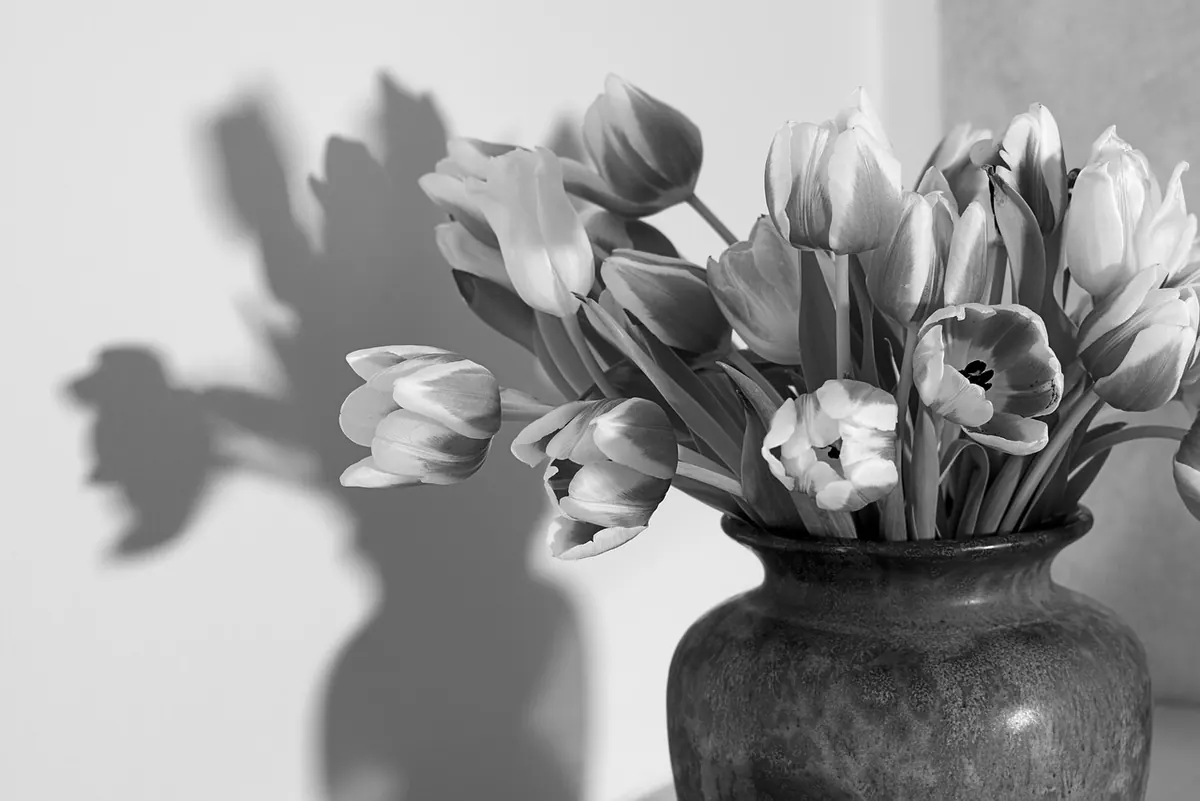
While you have the bunch in your hand, remove anything past its best. A single brown, slimy stem left in the water will shorten the life of everything around it, and deadheading spent blooms redirects the plant's energy to the flowers still opening. Tulips will carry on growing in the vase and can look untidy by day four; a light trim and a cooler spot overnight keeps them straighter.
Temperature and Where the Vase Sits
Placement matters more on a desk than almost anywhere else in the house, because a home office packs several heat sources into a small space. Keep the vase away from radiator vents, direct sun through a window, the warm exhaust from a laptop or printer, and the draught from a frequently opened door. A cool, bright spot out of direct sunlight is ideal.
Overnight, move the vase to a cooler room or a hallway if your office holds the heat. Flowers lose far less water in a cool room, and a ten-second relocation at the end of the day is worth more than any additive. Keep the vase away from a fruit bowl too, since ripening fruit gives off a gas that speeds up ageing in flowers.
Feeding, Misting and Small Fixes
Commercial flower food does three jobs: it feeds the flowers with sugar, lowers the water's acidity so stems take water up more easily, and holds back bacteria. It is more reliable than homemade mixes, so use the sachet if you have one. If you don't, a teaspoon of sugar and a few drops of household bleach in a litre of water is the usual stand-in — and change the water daily if you go down that route.
A few quick remedies are worth knowing:
- Drooping heads: re-cut the stems and stand them in deep, cool water for an hour or two. Hydrangeas can be revived by floating the whole flower head in cool water for half an hour.
- Cloudy water: change it immediately and rinse the stems. Cloudiness means bacteria have taken hold.
- Slimy stems: rinse them under cool water and trim above the slimy section.
- Dropped petals: remove the affected stems rather than trying to save them.
A light mist of water over the foliage in the morning helps flowers that like humidity, such as ferns and hydrangeas. Avoid soaking blooms that bruise easily, and never mist in the evening, when damp petals sitting overnight can encourage mould.
The Seven-Day Routine at a Glance
- Day 1: Clean vase, strip lower leaves, cut 2–3cm at an angle, lukewarm water plus flower food.
- Day 2: Top up the water. Move the vase out of direct sun if the desk warms up.
- Day 3: Full water change, rinse stems and vase, fresh flower food.
- Day 4: Re-trim 2cm from each stem. Remove faded blooms.
- Day 5: Full water change. Check placement again — the desk layout may have shifted.
- Day 6: Re-trim and tidy. Move the vase somewhere cooler overnight.
- Day 7: Assess honestly. Keep what still looks well, compost the rest, and start again.
Make It a Two-Minute Ritual
The routine only works if it fits the way you actually work. Attach it to something you already do: top up the water when you open your laptop, change it when you make your second coffee, re-trim the stems when you tidy your desk on a Friday. Keep a small jug and a pair of secateurs in a drawer, and keep the vase small enough that a full water change takes seconds rather than becoming a chore you postpone.
Do that, and a modest bunch bought on a Monday can still be holding its shape the following weekend — which is a good return on roughly ten minutes of attention across the week.
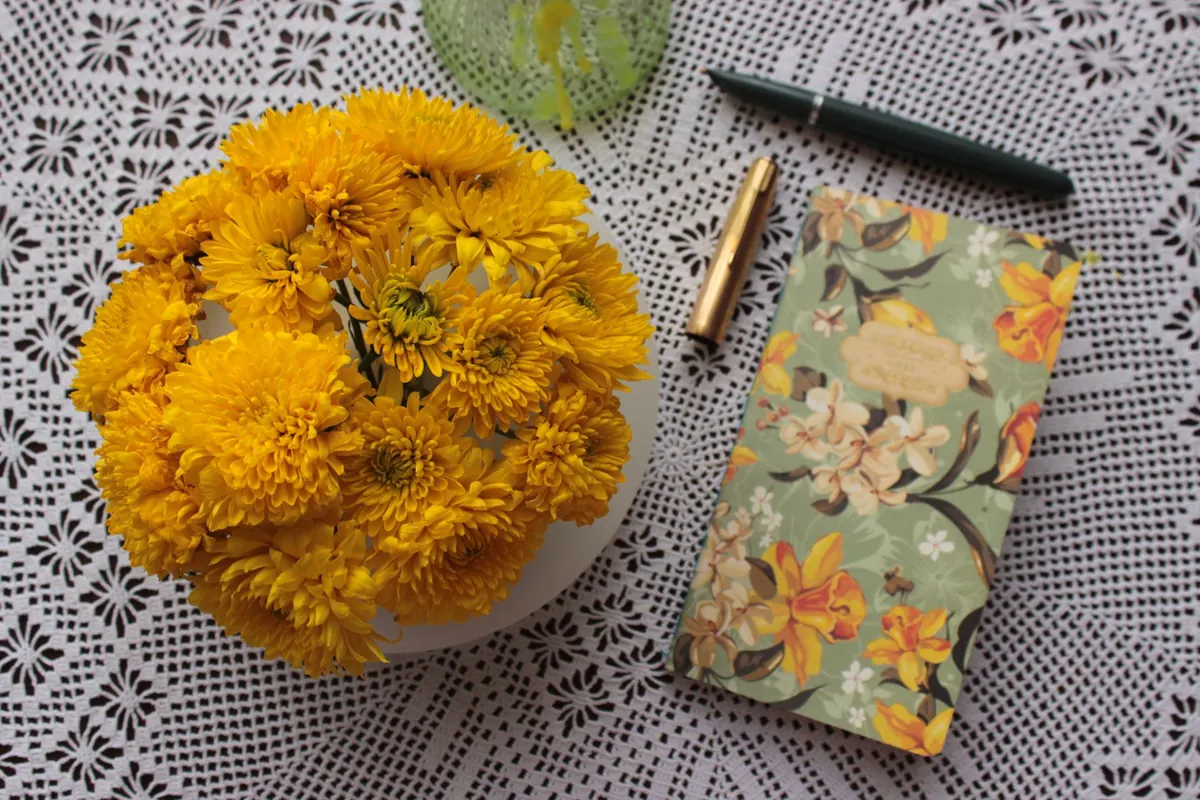
Photo: Peggychoucair / Pixabay

How to Organise Cables and Chargers Without Hiding Your Desk Decor
Cable management that keeps chargers tidy without emptying your desk: simple routes, clips, trays and...
Spring Refresh: 10 Floral Desk Decor Ideas Using British Blooms
Ten seasonal arrangements for a spring desk using British-grown blooms, plus practical advice on choosing,...
About Us